The Power Behind Every Journey
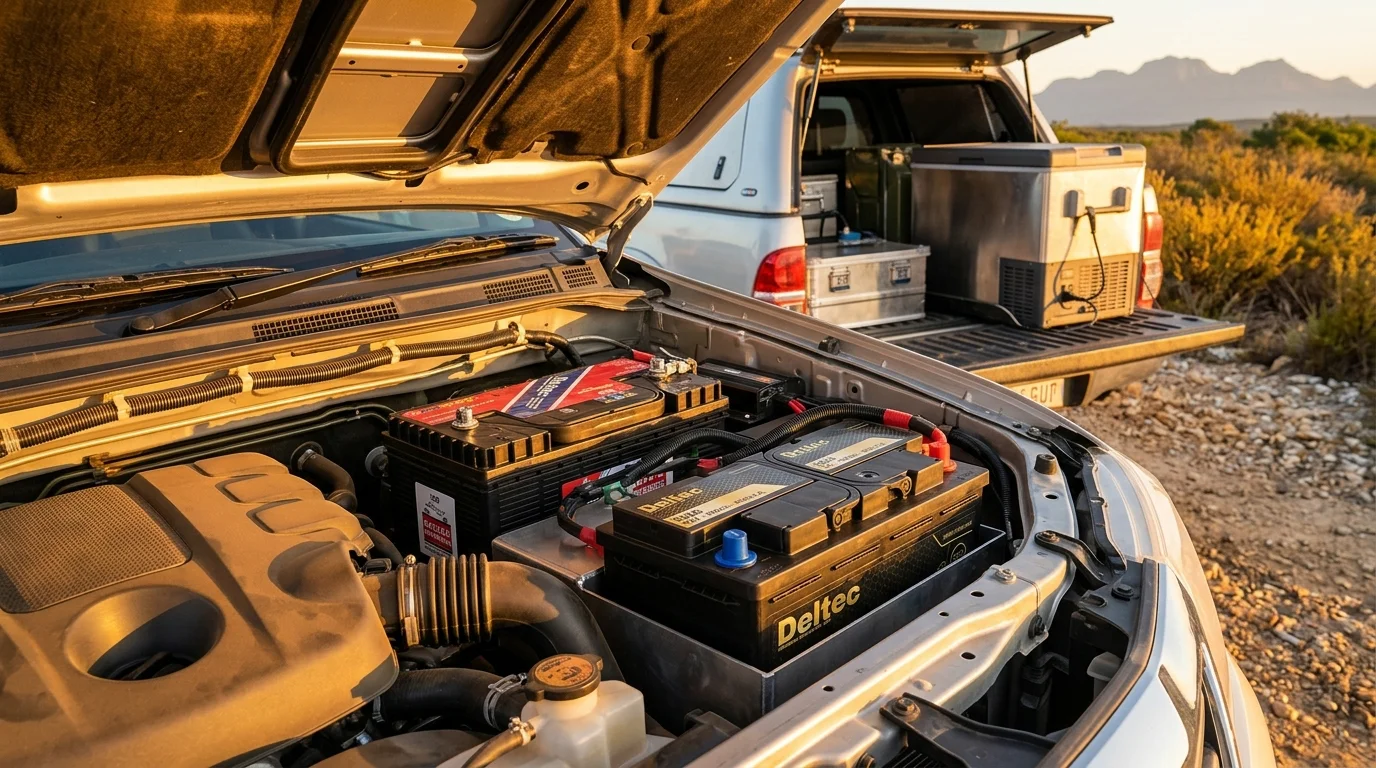
Your vehicle’s battery is more than a storage unit — it’s the beating heart of your electrical system. From the moment you turn the key to when you power a fridge, compressor, or light in the middle of the Karoo, the battery is what keeps everything running smoothly.
But not all batteries are created equal. As technology advances, more vehicle owners — from city commuters to off-grid adventurers — are asking the same question:
“Should I stick with a traditional lead-acid battery, or upgrade to lithium?”
At Deltec Batteries, we understand that every driver’s needs are different. Whether you’re managing a daily commute, powering tools at a job site, or venturing into remote areas, the right battery choice will define your experience. In this article, we’ll compare lithium and lead-acid batteries, explore their real-world applications, and help you decide which one fits your lifestyle — with trusted recommendations from Deltec’s expert range.
2. Understanding the Basics: Lead-Acid vs. Lithium
Lead-Acid Batteries (AGM & High-Cycle)
For decades, lead-acid batteries have been the cornerstone of vehicle power. They’re tough, affordable, and reliable — making them a go-to for millions of drivers across South Africa.
They work by storing energy through a chemical reaction between lead plates and an electrolyte solution. When discharged, this reaction releases energy to power your vehicle’s electrical systems.
Why they’re still relevant:
Lead-acid batteries, especially AGM (Absorbed Glass Mat) and High-Cycle types, remain unbeatable for certain applications. They’re cost-effective, easy to find, and capable of handling the rigours of both city driving and rural conditions.
Best suited for:
- Engine starting in cars, bakkies, and SUVs
- Secondary (auxiliary) batteries in dual setups
- Moderate cycling applications such as powering small fridges, lights, or tools
Pros:
- Proven technology with decades of reliability
- Affordable initial investment
- Performs well in colder climates
- Wide availability and easy installation
Cons:
- Heavy and less energy-dense than lithium
- Slower recharge times
- Shorter lifespan when frequently discharged
Lithium Batteries (LiFePO₄)
If lead-acid batteries are the old guard, lithium batteries are the next generation of portable power. Using Lithium Iron Phosphate (LiFePO₄) chemistry, these batteries deliver far greater energy density, faster recharge times, and a dramatically longer lifespan.
Take the Deltec 12.8V 100Ah Lithium Battery for example — a powerful, lightweight solution designed for today’s overlanders, campers, and eco-conscious travellers. Weighing just 10 kg, it offers thousands of charge cycles and a built-in Battery Management System (BMS) protection against overcharge, over-discharge, and short circuits.
Best suited for:
- Off-grid and overland travel setups
- Caravans, 4x4s, and solar systems
- Marine, RV, or inverter applications
- Long-term, deep-cycle energy use
Pros:
- Up to 10x longer cycle life than lead-acid
- Fast charging and consistent power output
- Lightweight and compact design
- Maintenance-free with integrated safety features
Cons:
- Higher upfront cost
- May need specific chargers or controllers
- Sensitive to extremely low temperatures
3. Performance Comparison: What Really Matters
| Feature | Lead-Acid (AGM/High-Cycle) | Lithium (LiFePO₄) |
| Cycle Life | 300–800 cycles | 2000–5000+ cycles |
| Depth of Discharge (DoD) | 50% recommended | 80–100% usable |
| Weight | Heavy (23–30 kg typical) | Light (around 10 kg) |
| Charging Speed | Moderate | 2–3x faster |
| Maintenance | Minimal | None |
| Cost | Lower upfront | Higher upfront, lower lifetime cost |
| Ideal Use | Starter/Secondary | Deep-cycle/Auxiliary/Solar |
When comparing lifespan, lithium batteries clearly outperform lead-acid in total usable energy. While a lead-acid battery may last a few years with moderate cycling, a lithium battery can sustain over a decade of use under proper care, making it a better long-term investment for serious travellers and energy users.
4. Real-World Scenarios – Which One Fits Your Lifestyle?
Everyday Commuter: Reliable and Practical
If your driving is mainly city-based or you use your vehicle for work commutes, a lead-acid battery remains your best bet.
These batteries are optimised for short, powerful bursts of energy to start your engine and support electronics like headlights, infotainment systems, and air conditioning.
Best choice:
A Deltec lead-acid starter battery — cost-effective, dependable, and available in a wide range of sizes.
Perfect for sedans, hatchbacks, and SUVs from brands like Toyota, Volkswagen, Ford, and Nissan.
Weekend Adventurer or Overlander: Power Beyond the City
For those who live for the weekend getaway — camping under the stars, exploring rugged trails, or setting up base at remote campsites — a dual battery system is essential.
This is where the Deltec 1250 High-Cycle Battery shines — not as your main battery, but as a secondary power source.
Paired with your starter battery, it runs everything from fridges and compressors to LED lights and portable stoves, without draining your vehicle’s ignition system.
Why it works:
- Deep-cycle design handles multiple charge and discharge cycles.
- Recharges easily via alternator or solar input.
- Perfect for setups in Toyota Hilux, Ford Ranger, Isuzu D-Max, or caravans.
Scenario example:
You’re camping for the weekend in the Cederberg. Your Deltec 1250 runs your fridge, lighting, and phone chargers for two full days. When you drive out, the alternator automatically recharges it — ready for your next trip.
Eco-Conscious Explorer: Cutting-Edge Lithium Power
If you travel off-grid often, or you’re upgrading your rig for serious overlanding, the Deltec 12.8V 100Ah Lithium Battery is the powerhouse you need.
Real-world use:
Imagine you’re on a month-long road trip across Namibia. With your lithium setup, you can run a 12V fridge, lighting, camera gear, and even a small inverter for charging a laptop — all without worrying about running flat.
You can recharge through solar panels or the alternator, and the built-in BMS ensures every cycle is safe and efficient.
Why upgrade:
- Up to 5000 charge cycles — roughly 10x more than AGM batteries
- Weighs 10 kg — half the weight of comparable high-cycle batteries
- Delivers steady voltage output even as the charge decreases
- Ideal for long-term solar storage or portable power banks
5. Safety, Maintenance, and Reliability Tips
A great battery setup is only as good as its care and installation. Whether you’re using lead-acid or lithium, follow these essential safety practices:
- Use the correct charger: Lithium batteries need LiFePO₄-compatible chargers to maximise performance and lifespan.
- Keep terminals clean: Check for corrosion or loose connections regularly.
Charge regularly: Don’t let your battery sit discharged for long periods. - Ventilation matters: While sealed, lead-acid batteries still need airflow to prevent heat buildup.
- Test periodically: Visit a Deltec-approved installer for load testing, voltage checks, and replacement advice before road trips.
6. Conclusion: Choosing Your Perfect Power Partner
In the end, the right battery depends on your needs and lifestyle.
- If you want affordable reliability for everyday driving, a Deltec lead-acid option is your best match.
- If you need flexible, deep-cycle power for camping or dual setups, the Deltec 1250 High-Cycle delivers balance and endurance.
- And if you’re ready to go fully off-grid, invest in lithium — the Deltec 12.8V 100Ah Lithium Battery will change the way you travel.
Whatever your journey, Deltec Batteries ensures you’re powered for it — from weekday commutes to wild adventures.

About Deltec Batteries
At Deltec Batteries we do more than sell batteries, we are a dynamic, forward-thinking company at the forefront of robust, efficient energy solutions – At home. At work. On the road – Wherever life takes you.
Follow Us
@deltecbatteriesbellville
@deltecbatteriestokai
@deltecbatteries
Shop Battery Deals
Motorcycle Batteries
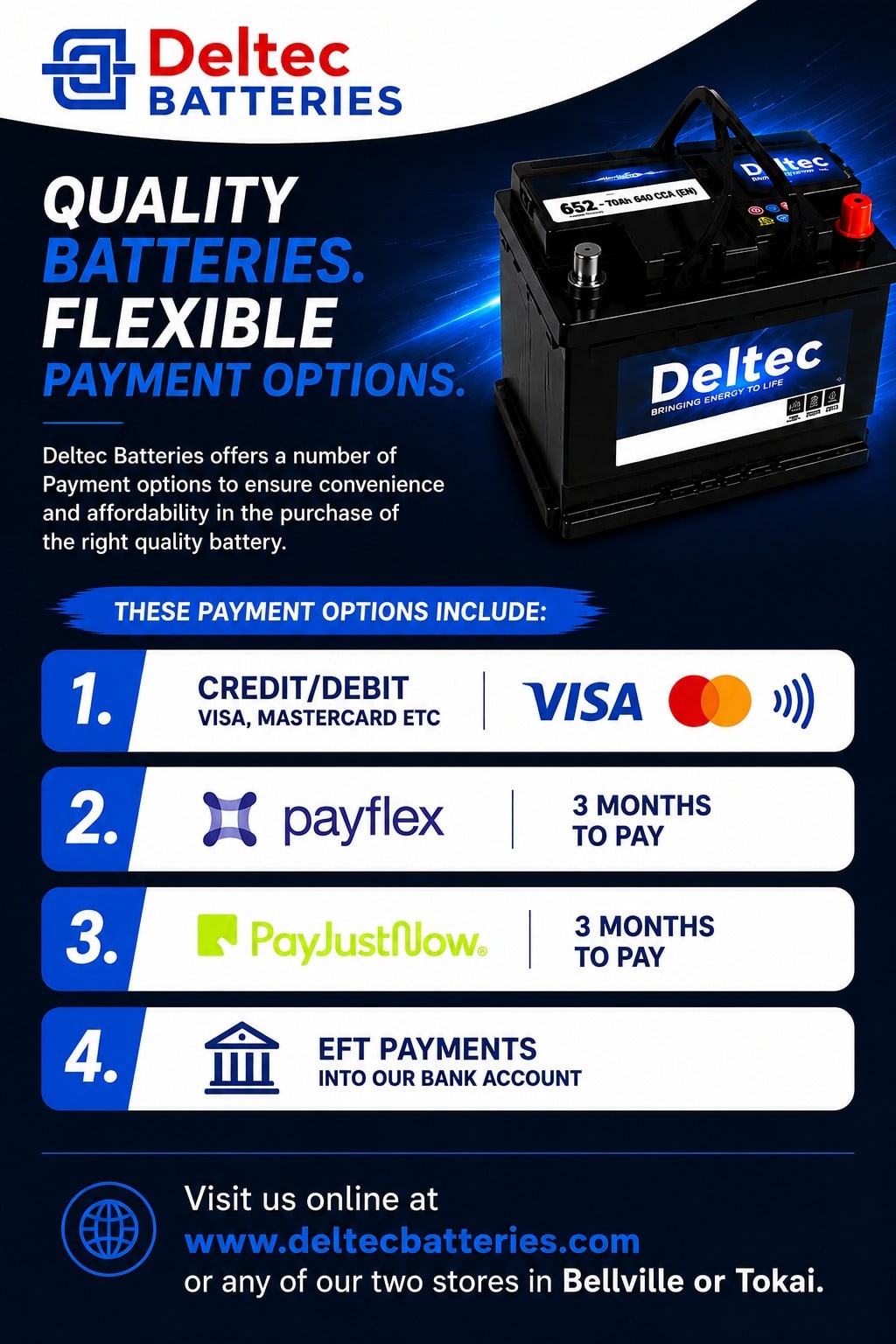
Convenient payment
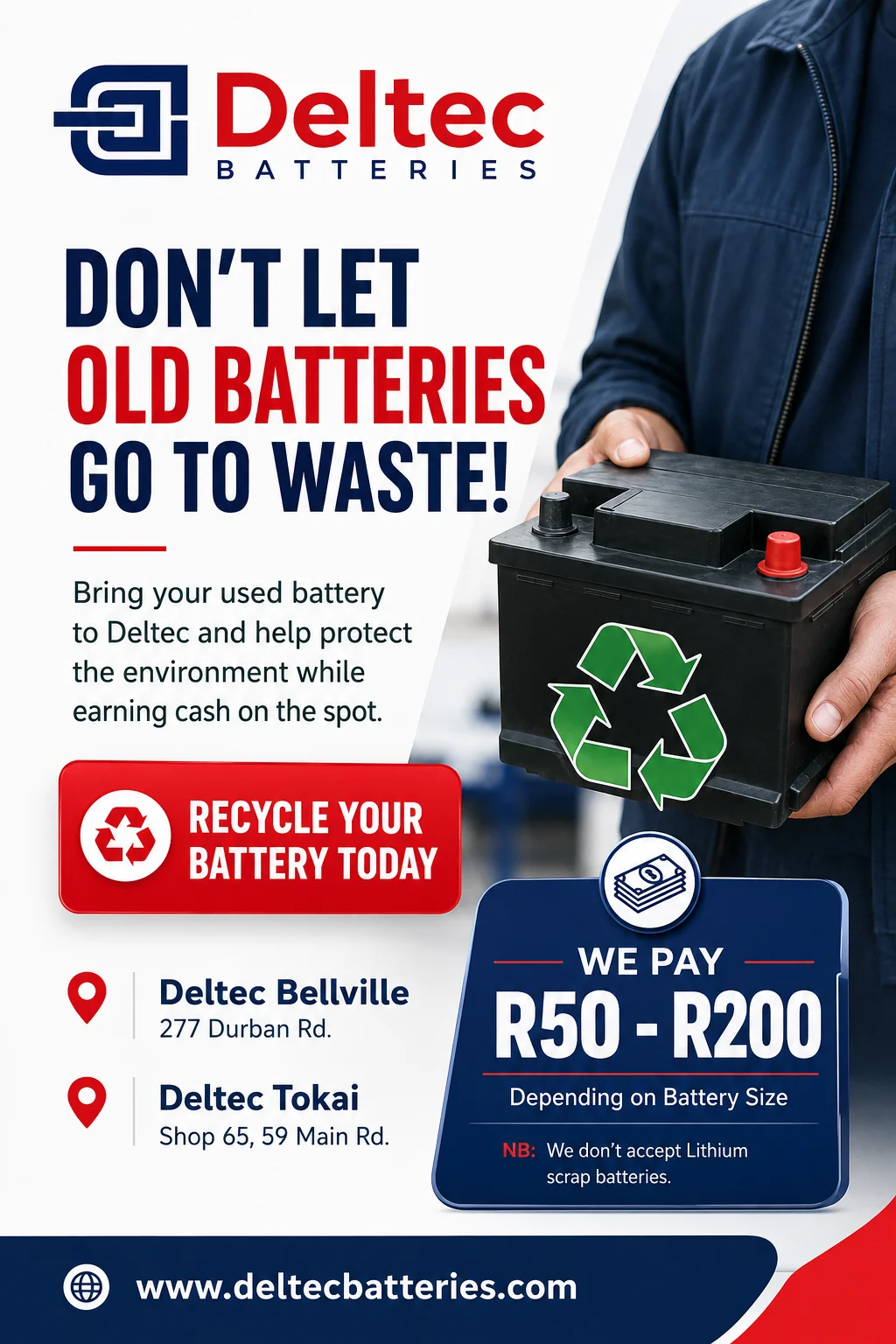
Earn Money Recycling
Recent Blog pOSTS