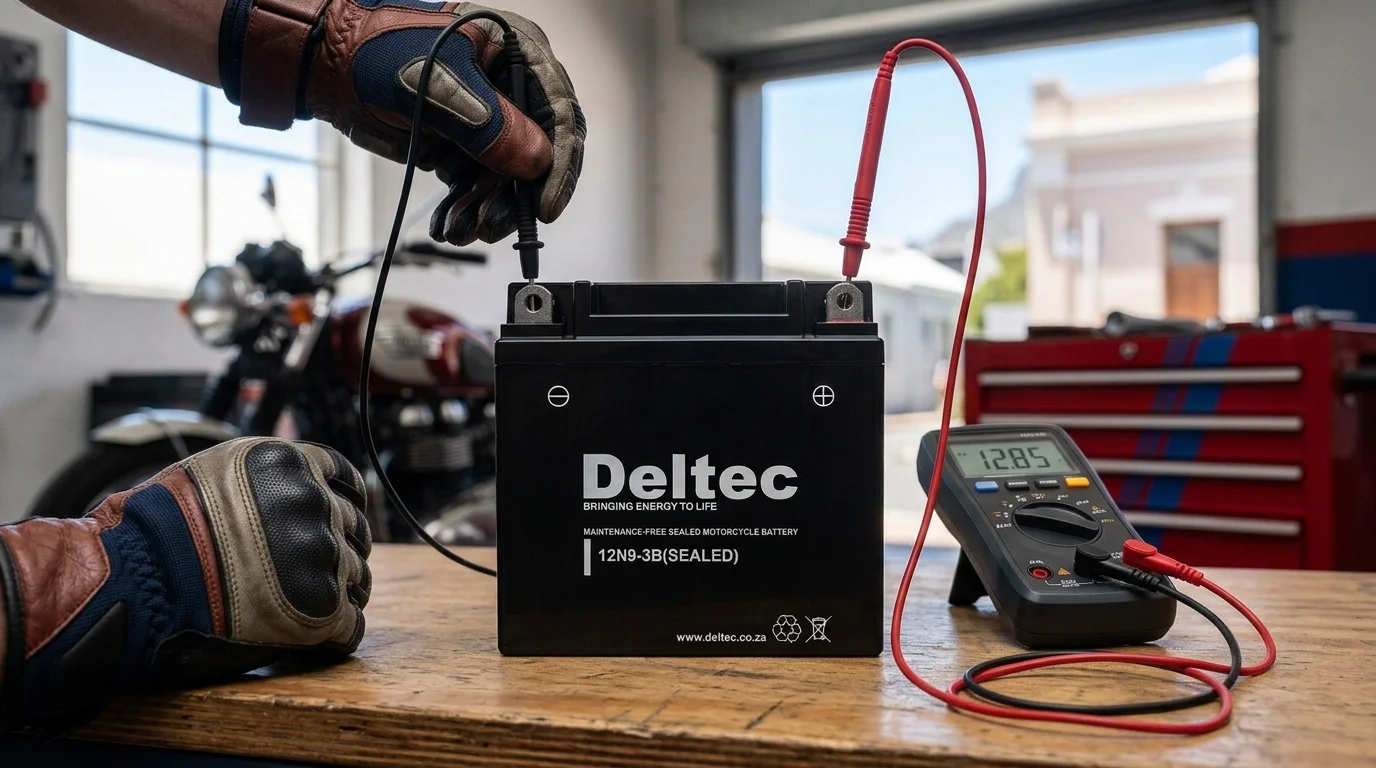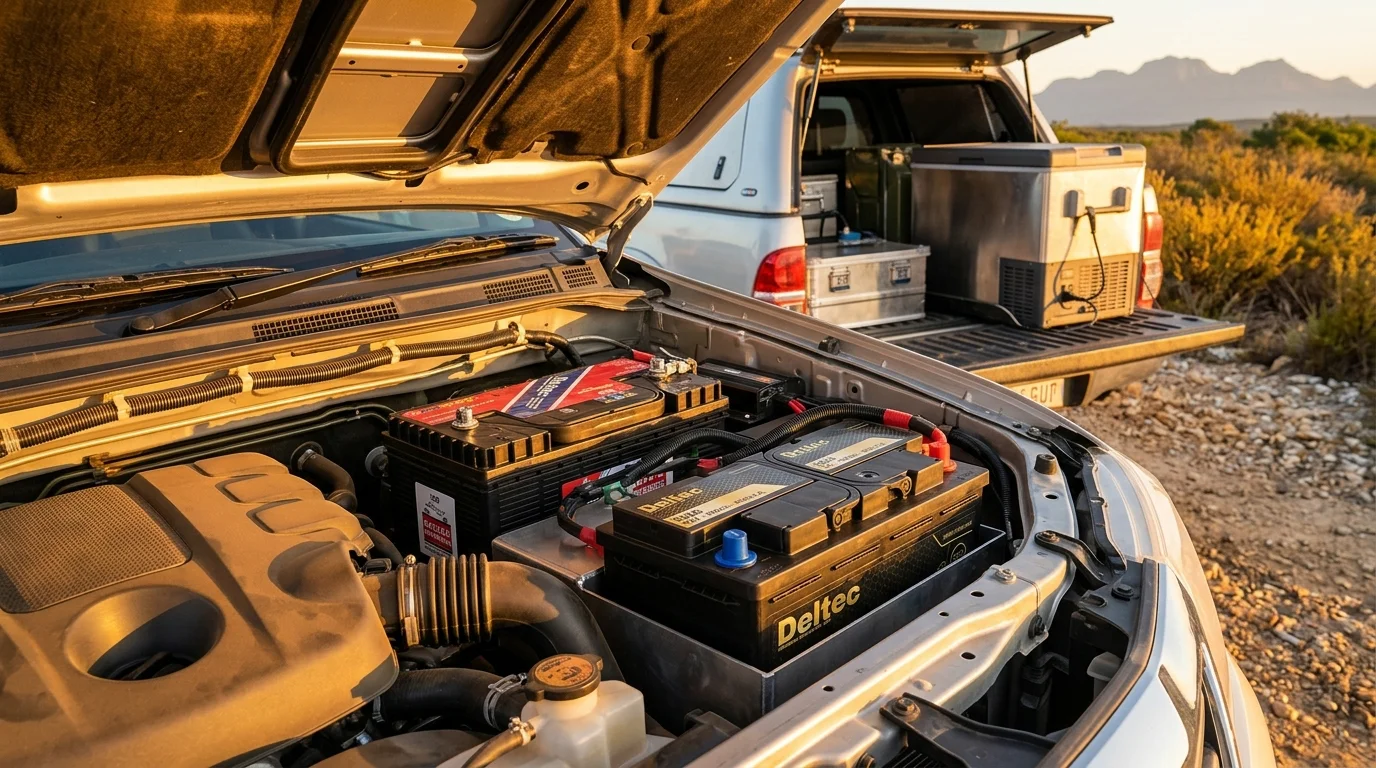
Pop the bonnet on any car, and you will find a battery that looks a lot like the ones sold for caravans, boats and solar setups. They share a similar box shape, the same 12 volts and often a similar price bracket, so it is easy to assume they are interchangeable. They are not.
Deep cycle batteries and car batteries are built for opposite jobs. One delivers a huge burst of power for a few seconds, and the other delivers steady power for hours. Put either in the wrong role, and you will shorten its life or end up stuck with a flat battery at the worst moment.
With summer approaching in Cape Town and holiday road trips around the corner, now is a good time to get this right. This guide explains how deep cycle batteries differ from car batteries, whether you can swap one for the other, and how to choose the right one for your vehicle, campsite or home backup.
What Are Deep Cycle Batteries?
A deep cycle battery is designed to be drained deeply and then recharged, again and again. While a car battery delivers one hard punch, deep cycle batteries release energy slowly and steadily over many hours. That is why you will find them behind caravan fridges, boat electronics, solar storage and home inverters.
In camping and caravan circles, you will often hear the term leisure battery used instead. It means the same thing: a battery meant to run your lights, fridge and other extras while the engine is off.
Built for steady power, not a quick burst
The difference starts inside the case. Deep cycle batteries use thicker lead plates, denser active material and sturdier separators, which help them survive the wear of repeated deep discharges. The trade-off is that thick plates cannot release energy as violently as thin ones.
A deep cycle battery can still deliver a surge when you need it, but it cannot match the power a starter battery produces in those first seconds of cranking. Think of it as a marathon runner rather than a sprinter.
The main types of deep cycle batteries
Most deep cycle batteries fall into a few families:
- Flooded lead-acid: traditional and good value, but it needs periodic topping up with distilled water
- AGM: sealed, spill-proof and low maintenance
- Gel: sealed and tolerant of vibration, popular for marine and off-road use
- Lithium (LiFePO4): lighter and longer-lasting, but more expensive upfront
Each has its place, and we cover the benefits of deep cycle batteries in more detail in an earlier guide.
What Does a Car Battery Actually Do?
A car battery, also called a starter battery, has one big job: cranking your engine. It delivers a large current for a few seconds, then hands off to the alternator, which runs the electrical system and recharges the battery as you drive.
To achieve that surge, car batteries use thin plates that give a large surface area. Because the alternator quickly replaces what starting uses, a car battery in normal use may never be drained beyond roughly 20 per cent of its capacity, according to HowStuffWorks’ explanation of car versus deep cycle batteries. That shallow, short-burst duty is exactly what it is built for.
The starter’s one big job
Every time you turn the key, the battery supplies the starter motor with a heavy jolt of current. After that, the alternator takes over. This is why a healthy car battery can last for years without ever being stretched.
The problem starts when a battery built for this routine is asked to do something else, like power a fridge overnight.
What cold cranking amps really tell you
Cold cranking amps, or CCA, is the number you will see on most car battery labels. It states how much current a battery can deliver for 30 seconds at minus 18 degrees Celsius while holding a minimum voltage. Cape Town rarely gets that cold, but CCA is still a handy way to compare how hard one starter battery can punch against another.
A higher CCA generally means stronger starting performance, especially for larger engines. Deep cycle batteries usually carry a lower CCA rating, which is one of the first clues that they are built for something different.
Deep Cycle Batteries vs Car Batteries: What Is Actually Different?
Here is a quick car battery vs deep cycle battery comparison before we dig into the details.
| Feature | Car battery (starter) | Deep cycle battery |
| Main job | Cranks the engine | Powers loads for hours |
| Plates | Thin, large surface area | Thick, dense |
| Cranking power | Very high | Lower |
| Depth of discharge | Shallow, around 20% or less in normal use | Deep, roughly 50% to 80% |
| Handles repeated deep discharge | No | Yes |
| Typical uses | Cars, bakkies, motorcycles | Caravans, boats, solar, inverters, camping fridges |
| Upfront cost | Generally lower | Generally higher |
Plate construction and how each battery delivers power
Both battery types use the same basic lead-acid chemistry, so the difference lies in how each one is designed. Thin plates expose more surface area to the electrolyte, which lets a starter battery release a large current fast. According to Battery University, lead-acid batteries can deliver high pulse currents for a few seconds, which is why they suit starting duty so well.
Thicker plates do the opposite. They release energy more slowly, but they hold up far better when the battery is discharged deeply and recharged repeatedly.
Depth of discharge and cycle life
Depth of discharge describes how much of a battery’s capacity you use before recharging. A starter battery is designed for shallow discharges, and pushing it deeper again and again wears it out fast.
Deep cycle batteries are rated for far more. PVEducation’s guide to lead-acid battery characteristics explains that a deep cycle battery is designed to be discharged beyond 50 per cent, and sometimes as far as 80 per cent, and a good one should still manage more than 1,000 cycles at those depths. Even so, discharging a lead-acid battery less deeply will extend its life.
Cranking power vs reserve capacity
Car batteries are rated by cranking power. Deep cycle batteries are rated by capacity in amp hours, which tells you how long they can run a load. A deep cycle battery usually gives up some cranking power in exchange for far more stamina, while a car battery does the reverse.
This is the heart of the starter battery vs deep cycle battery question. Each one gives up exactly what the other needs most, which is why they are not interchangeable.
Can You Use a Deep Cycle Battery in a Car?
The short answer is sometimes, but it is rarely a good idea. A deep cycle battery can turn over an engine if its cranking rating is high enough, but it is not optimised for the job.
Can a deep cycle battery start the engine?
Many deep cycle batteries have much lower cold cranking amps than a car battery of the same size. That can mean slow cranking, especially on larger petrol engines, diesels and cooler mornings. Repeated hard starts also stress a battery that was built for gentle, sustained loads.
Charging and alternator considerations
Your alternator is set up to top up a starter battery quickly after a short draw. Deep cycle batteries generally take longer to recharge, which can keep the alternator working harder for longer. Some modern vehicles also expect a particular battery type, so it is worth checking your owner’s manual before changing anything.
The dual-purpose exception
Dual-purpose batteries try to bridge the gap, offering decent cranking power and moderate deep cycle ability. They are often used in boats and some 4×4 setups. If you are curious whether one would suit your vehicle, ask the Deltec team, but for everyday driving a correctly specified car battery is still the safest choice.
Can a Car Battery Power Your Camping Fridge or Inverter?
Yes, it will run them for a while. But a starter battery is not built for that duty, and repeated deep discharges will shorten its life quickly. There is also a bigger risk: drain the battery that starts your engine, and you may not be able to drive home.
Why a starter battery struggles with repeated deep discharge
Picture a weekend at the coast. You run the fridge and lights overnight from the car battery, and by morning it has used far more of its capacity than it ever would in normal driving. Do that a few times and the thin plates degrade, capacity drops and eventually the car will not start at all.
The same applies to a home inverter during load shedding. A car battery might power it in an emergency, but deep cycle batteries are the right tool for regular backup duty.
The dual battery setup is the proper fix
A dual battery system solves the problem by giving each job its own battery. The starter battery cranks the engine, and a deep cycle battery runs your fridge, lights and accessories. An isolator or battery management system keeps them separate so you never flatten the battery that starts the vehicle.
It is the standard approach for 4×4 and camping setups, and it is worth considering if you regularly run gear from your vehicle.
How Does Cape Town Heat Affect Both Batteries?
Most people think of winter as the season that kills batteries, but in Cape Town the bigger threat often arrives after winter. Cold exposes a weak battery, while heat does the actual damage.
Why summer is harder on batteries than winter
Heat speeds up the chemical reactions inside a battery, including the ones that cause corrosion and wear. The same Battery University source notes that for sealed lead-acid batteries, every 8 degrees Celsius above the ideal 25 degrees roughly halves battery life.
Under the bonnet, temperatures run well above the air temperature, so a car battery lives in a hotter environment than you might expect. Deep cycle batteries stored in a hot boot, caravan or roof space face the same problem.
Parked cars and festive road trips
Summer also loads batteries harder. Aircon runs longer, fridges work overtime, and road-trip gear such as dashcams and chargers adds up. A battery that was already weakened by winter often gives up in the first heatwave.
Before the holiday rush, have your battery tested at your nearest branch. Catching a weak battery early costs far less than a breakdown on the N2.
Do You Need Deep Cycle Batteries or a Car Battery? A Simple Guide
Choosing comes down to what you are asking the battery to do. If you are not sure, start with the job and work backwards.
Quick match by use
- Daily driving and short trips: a car battery
- Camping fridge, lights and accessories: a deep cycle battery, ideally in a dual battery setup
- Home inverter and load shedding backup: deep cycle batteries
- Caravan, boat or trolling motor: deep cycle batteries
- 4×4 that starts the engine and runs a fridge: a dual battery system
- One battery for occasional starting and light cycling: a dual-purpose battery
Choosing 12-volt deep-cycle batteries and understanding price
Most vehicle and leisure setups run on 12-volt deep-cycle batteries, which come in a range of capacities measured in amp hours. Size the battery by how much energy you actually use, not just by whether it fits the tray. A lead-acid deep-cycle battery works best when you avoid draining it past about half, so you may need a larger battery than the raw numbers suggest.
The deep cycle battery price you pay depends on capacity, chemistry and brand. They usually cost more than a car battery because of the extra lead and heavier construction, and lithium costs more again upfront. Compare the cost over the battery’s working life, not just the sticker price.
Lead-acid or lithium?
Lead-acid deep cycle batteries offer good value and are a sensible choice if budget is tight and weight is not a concern. Lithium (LiFePO4) is lighter, offers more usable capacity and typically lasts through more cycles, but it costs more upfront. Our guide to lithium vs lead-acid breaks down which suits which driver.
When you are ready to compare options, browse Deltec’s deep cycle range.
Conclusion
Deep cycle batteries and car batteries may look alike, but they do very different jobs. A car battery gives you a powerful start, and deep cycle batteries give you steady power over time. Match the battery to the job, and you will get far more life out of both.
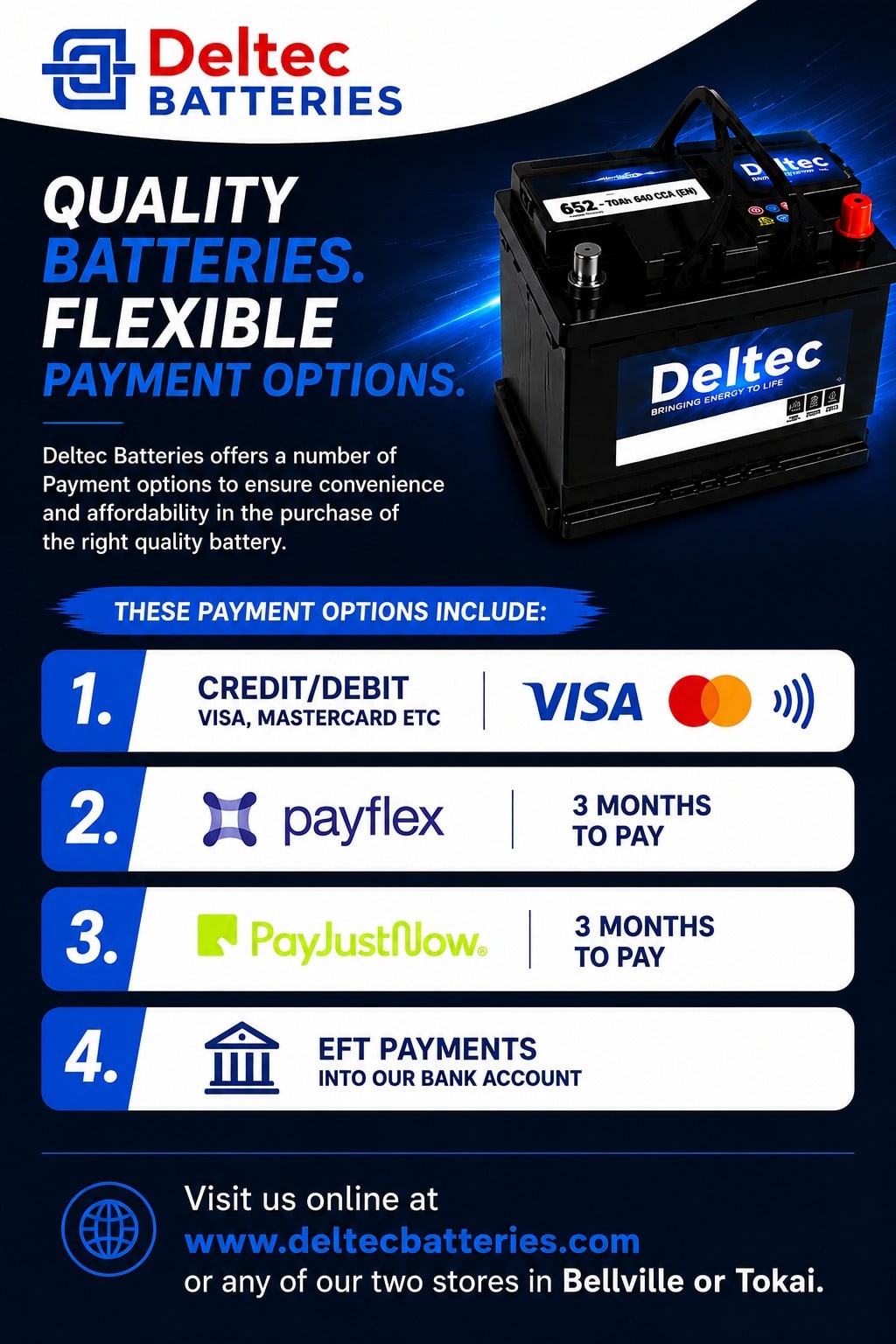
Not sure which one you need? Visit Deltec Batteries in Bellville or Tokai, call 021 023 4119, or browse Deltec’s deep cycle range online. Bring your vehicle or describe your setup, and our team will point you to the right fit. You can also spread the cost with PayJustNow or PayFlex, so the right battery does not have to wait.
Frequently Asked Questions
Can a deep cycle battery start a car?
It can, if it has enough cranking power, but it is not designed for it. Starting relies on a huge burst of current, which is what starter batteries are built to deliver. For daily driving, a car battery remains the better fit.
Is a car battery the same as a deep cycle battery?
No. A car battery is a starter battery built for short, powerful bursts, while a deep cycle battery is built for long, steady discharge. Both use lead-acid chemistry, but the plate design and intended duty are very different.
Which lasts longer, a deep cycle battery or a car battery?
Each can last for years in its own role, so the real difference is how it wears. A deep cycle battery tolerates repeated deep discharge, while a car battery does not. Use either one outside its intended job and its lifespan drops quickly.
How can I tell if I have a starter battery or a deep cycle battery?
Check the label. Starter batteries list cold cranking amps prominently, while deep cycle or leisure batteries highlight capacity in amp hours and may say deep cycle, marine or leisure. If you are unsure, bring it to Deltec Bellville or Tokai, and we can identify it.
Are deep cycle batteries more expensive than car batteries?
Generally yes, because they use more lead and sturdier construction. Deep-cycle battery prices also vary with capacity and chemistry, and lithium sits at the top of the range. Over a long working life of daily cycling, the extra cost can pay for itself.

About Deltec Batteries
At Deltec Batteries we do more than sell batteries, we are a dynamic, forward-thinking company at the forefront of robust, efficient energy solutions – At home. At work. On the road – Wherever life takes you.
Follow Us
@deltecbatteriesbellville
@deltecbatteriestokai
@deltecbatteries
Shop Battery Deals
Motorcycle Batteries
Convenient payment
Earn Money Recycling
Recent Blog pOSTS