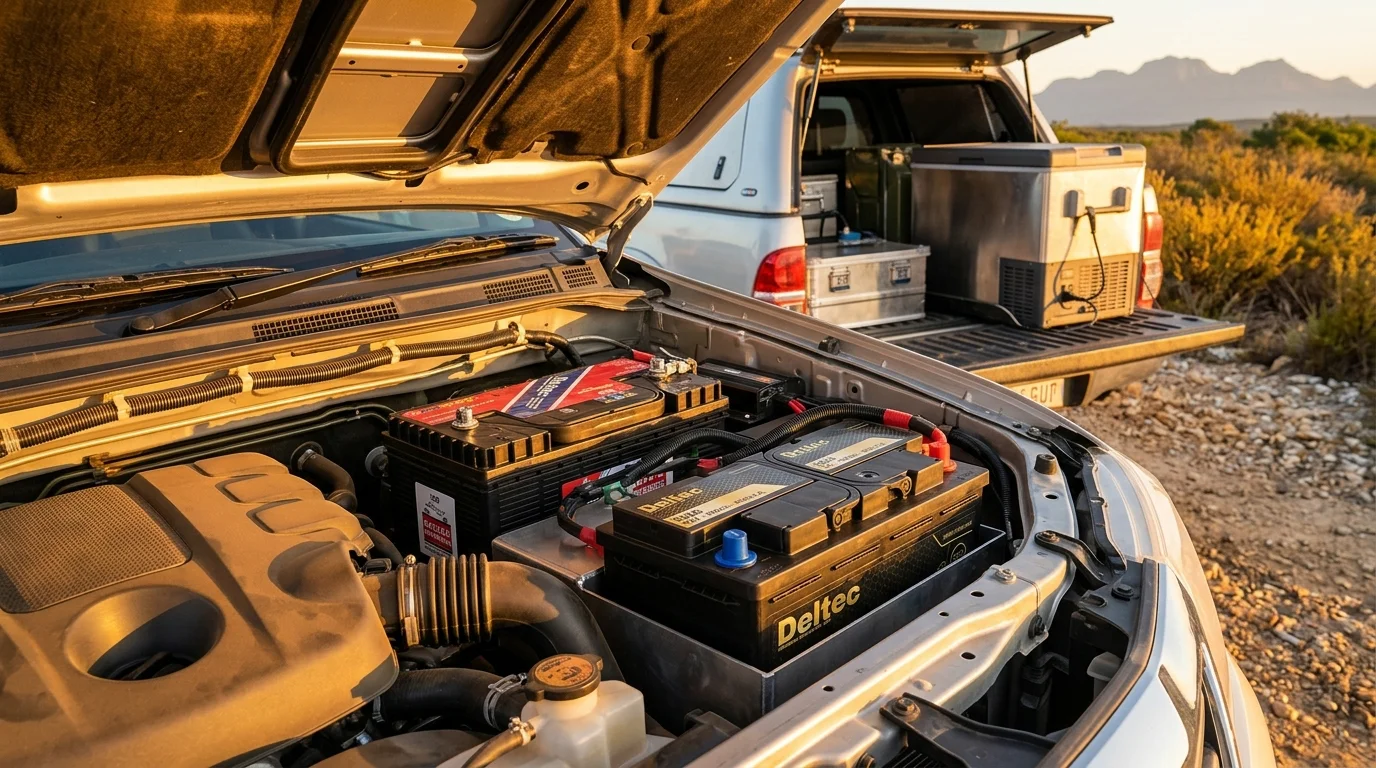
You’re at a battery fitment centre, and the technician just quoted you a price for an AGM battery that’s noticeably higher than the standard option you expected. Is it a genuine upgrade your car needs, or an upsell you can skip? If you’ve been comparing AGM car batteries against the standard flooded battery your car came with, you’re not alone, and the answer depends on a few specifics about your vehicle and how you drive it.
This guide breaks down exactly how AGM and standard car batteries differ, what actually shortens a battery’s life in Cape Town’s climate, and how to work out which one genuinely fits your daily drive, not just your budget on the day.
In this guide:
- What’s the Real Difference Between AGM and Standard Car Batteries?
- AGM vs Standard: Lifespan and Reliability Compared
- Does Your Car Actually Need an AGM Battery?
- How AGM and Standard Batteries Handle Cape Town Summers
- AGM Battery Price vs Standard: Is the Extra Cost Worth It?
- Maintenance: What Each Battery Actually Asks of You
- So, Which One Fits Your Daily Drive?
What’s the Real Difference Between AGM Car Batteries and Standard Car Batteries?
At a glance, an AGM battery and a standard car battery look almost identical. Open either one up and the difference is immediately obvious: it comes down to how the electrolyte, the acid solution that lets the battery store and release charge, is held inside the case.
How a Standard Flooded Battery Works
A standard car battery, also known as a flooded lead-acid battery or wet cell battery, has lead plates sitting in a pool of liquid electrolyte. This design has powered vehicles for most of the last century because it’s simple, affordable, and easy to manufacture at scale. The trade-off is that the liquid can evaporate over time, especially in hot conditions, and the battery needs to stay reasonably upright to avoid spilling.
How an AGM Battery Works
An AGM battery, short for Absorbent Glass Mat, uses the same basic lead-acid chemistry but holds the electrolyte inside a fine fibreglass mat instead of leaving it as free liquid. That mat is sandwiched tightly between the plates, which makes the battery spill-proof, more resistant to vibration, and sealed against evaporation. It’s also why an AGM battery in car applications is increasingly the factory-fitted standard on newer models with more onboard electronics.
The lower internal resistance of an AGM design also allows for a higher voltage output and noticeably faster charging than a standard battery, which matters more than it sounds once you factor in a modern car’s electronics.
| Feature | Standard (Flooded) Battery | AGM Battery |
|---|---|---|
| Electrolyte | Free liquid | Absorbed in glass mat |
| Maintenance | May need water top-ups | Sealed, maintenance-free |
| Vibration resistance | Lower | Higher |
| Typical lifespan | 3-5 years | 6-8 years, sometimes longer |
| Cold cranking amps (CCA) | Varies by model | Often higher for equivalent size |
| Upfront cost | Lower | Higher |
AGM vs Standard: Lifespan and Reliability Compared
Average Lifespan of Each
A well-maintained standard car battery typically lasts three to five years, depending on how often it’s deeply discharged and how hot the environment gets. An AGM battery, thanks to its sealed design and stronger resistance to plate degradation, commonly reaches six to eight years under normal conditions.
Engine starts are another way to see the gap. Conventional flooded batteries are rated for roughly a third of the engine starts an AGM battery can handle over its service life, which is a big part of why AGM has become the default start-stop battery choice on newer vehicles.
What Actually Kills a Standard Battery Early
Sulfation, a chemical buildup on the plates caused by the battery sitting at a low state of charge, is the most common cause of premature failure in standard batteries. Short trips that don’t fully recharge the battery, long periods of the car sitting unused, and repeated deep discharges all speed it up. Because the electrolyte is sealed and immobilised in an AGM battery, it’s inherently more resistant to this kind of damage, though it isn’t immune if the battery is left flat for extended periods.
If your current battery is already showing early warning signs, it’s worth reading through the signs your battery needs replacing before deciding which type to replace it with.
Does Your Car Actually Need an AGM Battery?
Start-Stop and Regenerative Braking Systems
This is the single biggest factor in the decision, and for a growing number of drivers, it isn’t really a choice at all. Vehicles fitted with start-stop technology, which automatically shuts the engine off at traffic lights and restarts it when you release the brake, place far greater demand on the battery than a conventional engine ever did. Each stop is effectively a discharge cycle, and a standard flooded battery simply isn’t built to handle that many partial discharges without failing early. As one local report on South African driving conditions explains, standard batteries can’t cope with the demands of start-stop systems and tend to fail sooner than expected. Cars with regenerative braking, which recovers energy under braking and feeds it back into the battery, also need the faster charge acceptance that an AGM battery provides. Many drivers searching for AGM battery in car specifics are really just asking this one question.
How to Check What Your Vehicle Was Built For
Check your owner’s manual or the label on your current battery. Most start-stop and regenerative braking vehicles are fitted with an AGM or EFB battery from the factory, and manufacturers generally advise against downgrading to a standard battery even if it fits the physical space. While you’re checking, confirm the cold cranking amps rating stamped on the case matches your vehicle’s requirements, not just the battery type. If your car doesn’t have start-stop and you drive it regularly enough to keep the battery charged, a standard car battery may genuinely be all you need, and there’s no shame in choosing it.
How AGM Car Batteries and Standard Batteries Handle Cape Town Summers
Heat, Evaporation, and Sulfation
Heat is harder on a car battery than cold, and Cape Town’s summer engine bay temperatures put real stress on both battery types. In standard batteries, heat speeds up electrolyte evaporation, which is exactly why topping up with distilled water matters if you’re running one through summer. AGM car batteries are sealed against evaporation, but they aren’t immune to heat. Sustained high temperatures still shorten an AGM battery’s working life, even though testing shows AGM units generally hold up better under heat exposure than flooded batteries over the same period. A pre-summer check is worth doing regardless of which type you run, which is part of why we recommend a seasonal battery check before the heat sets in.
Vibration and Rough Road Resistance
If your daily drive includes gravel roads, speed bumps, or generally rough surfaces, the fibreglass mat construction of an AGM battery holds up noticeably better over time than the free liquid inside a standard battery. This matters less for a pure daily commuter on tarred roads and considerably more if your route includes unpaved sections. It’s worth noting this is a different consideration to kitting out a vehicle for serious overlanding, where the choice often comes down to AGM vs lithium rather than AGM vs standard. We’ve covered that comparison for overland vehicle power separately if that’s closer to your situation.
AGM Battery Price vs Standard: Is the Extra Cost Worth It?
Upfront Cost Comparison
There’s no getting around it: AGM car batteries are priced higher than standard batteries at the point of purchase, typically somewhere between 40 and 100 per cent more depending on the size and brand. For a driver on a tight budget replacing a battery today, that gap is real and worth taking seriously.
Cost Per Year of Ownership
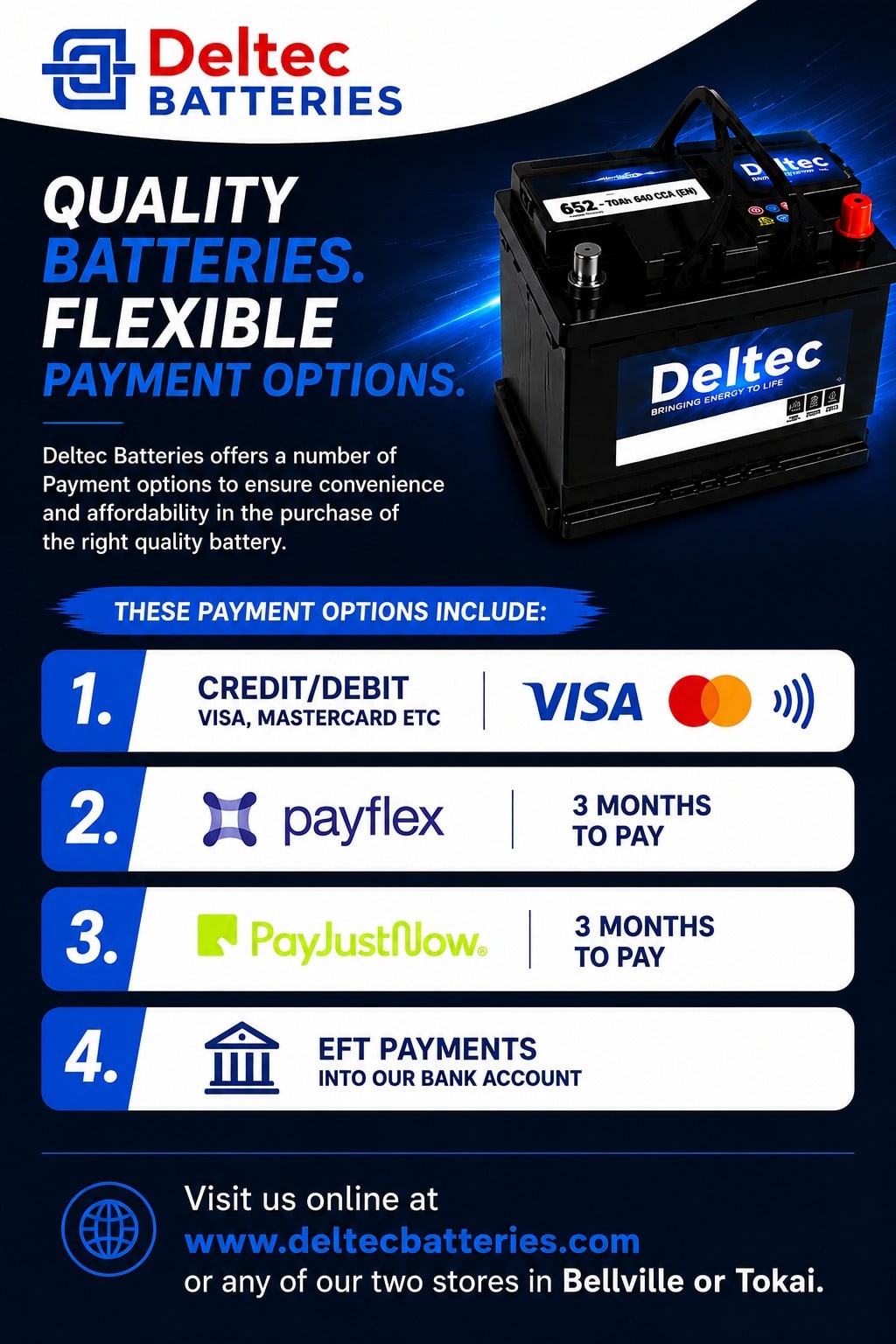
The upfront number isn’t the whole story. Understanding car battery lifespan helps put the price difference in perspective: if a standard battery lasts four years and an AGM lasts seven, the AGM’s higher price is spread over almost double the lifespan, which narrows the annual cost difference considerably and sometimes closes it entirely. Factor in fewer roadside call-outs and less risk of being stranded with a flat battery on a working day, and the AGM option often works out more cost-effective over time, even if it costs more today. If budget is the main obstacle rather than the maths, Deltec offers PayJustNow and PayFlex on battery purchases, so the higher upfront cost of an AGM battery doesn’t have to be paid in one lump sum.
Maintenance: What Each Battery Actually Asks of You
Topping Up vs Truly Maintenance-Free
A standard battery needs occasional attention: checking electrolyte levels, topping up with distilled water when needed, and keeping the terminals clean of corrosion. Skip this for too long, and you accelerate exactly the kind of degradation that leads to early failure. An AGM battery removes this task entirely; there’s no water to top up, and the sealed design resists the corrosion buildup that plagues flooded terminals. For anyone who wants a genuinely maintenance-free car battery, that’s a meaningful point in AGM’s favour, even setting aside the lifespan difference.
So, Which One Fits Your Daily Drive?
Choose Standard If…
- Your car doesn’t have start-stop or regenerative braking
- You drive regularly enough to keep the battery charged
- Budget is the priority, and you’re comfortable with routine maintenance
- Your vehicle was originally fitted with a standard battery
Choose AGM If…
- Your car has start-stop, regenerative braking, or a high electronic load
- Your daily route includes rough or gravel roads
- You want a maintenance-free battery with a longer working life
- Your car was factory-fitted with AGM, since downgrading isn’t recommended
Conclusion
Neither battery is objectively better; they’re built for different demands. A standard car battery remains a sound, affordable choice for straightforward daily driving without start-stop technology. An AGM battery earns its higher price tag on vehicles with heavier electronic loads, start-stop systems, or drivers who want to stop thinking about maintenance altogether. Check your owner’s manual, factor in how you actually drive, and choose the battery built for that reality rather than the cheapest option on the shelf.
Ready to make the switch or need help confirming what your car actually needs? Browse Deltec’s automotive battery range or pop into our Bellville or Tokai branch for a proper battery test before you buy. PayJustNow and PayFlex are both available if you’d rather spread the cost.
Frequently Asked Questions
Can I put a standard battery in a car that came with an AGM battery?
It’s technically possible if the physical size matches, but we don’t recommend it. Cars built with AGM batteries are usually tuned to that battery’s charging profile, and a standard battery won’t handle the demands of start-stop or regenerative braking systems, which leads to early failure.
How long do AGM Car batteries really last compared to standard batteries?
A standard car battery typically lasts three to five years, while a quality AGM battery commonly reaches six to eight years, and sometimes longer under good conditions. That gap narrows in extreme heat, where both battery types lose life faster than they would in milder climates.
Are AGM batteries worth the extra cost?
For vehicles with start-stop, regenerative braking, or heavy electronic demand, yes, the longer lifespan and reduced failure risk generally offset the higher AGM battery price over the ownership period. For a simple daily commuter without those systems, a standard battery may be the more cost-effective choice.
Do I need a special charger for an AGM battery?
Not necessarily, but a charger with an AGM-specific setting will charge it more efficiently and protect its lifespan. Many modern smart chargers include this setting by default, so it’s worth checking the specifications before assuming your existing charger is suitable.
How do I know if my car has a start-stop system?
The clearest sign is the engine switching off automatically when you come to a stop and restarting when you release the brake. If you’re unsure, your owner’s manual or vehicle badge will confirm it, and it’s worth checking before deciding between an AGM battery and a standard replacement.
Can Deltec fit an AGM battery at Bellville or Tokai?
Yes, both branches stock and fit AGM and standard car batteries, and can test your current battery and your vehicle’s requirements before recommending a replacement. Get in touch with the Deltec team to book a fitment or ask which battery type your car needs.

About Deltec Batteries
At Deltec Batteries we do more than sell batteries, we are a dynamic, forward-thinking company at the forefront of robust, efficient energy solutions – At home. At work. On the road – Wherever life takes you.
Follow Us
@deltecbatteriesbellville
@deltecbatteriestokai
@deltecbatteries
Shop Battery Deals

Motorcycle Batteries
Convenient payment
Earn Money Recycling

Recent Blog pOSTS