There’s nothing worse than swinging a leg over your bike on the first clear morning after weeks of rain, turning the key, and hearing nothing but a click. For most riders, that click means a flat battery, and a flat battery in winter usually means it wasn’t cared for properly while the bike sat idle.
Motorcycle batteries take a strain over winter, whether you’re riding through it or storing your bike until spring. The good news is that keeping yours healthy doesn’t take much time or money. It just takes a bit of routine and the right gear. This guide walks you through why winter is hard on motorcycle batteries, how to check whether yours needs attention, and the steps that will keep it charged, clean, and ready to start, no matter how many cold, damp mornings you throw at it.
Why Winter Is Hard on Motorcycle Batteries
Winter doesn’t need to be freezing to damage a battery. Cold, damp conditions and long periods of standing still are enough to shorten its life if you’re not paying attention.
How Cold and Damp Affect Battery Chemistry
A motorcycle battery produces power through a chemical reaction between lead plates and an electrolyte solution. Cold temperatures slow this reaction down, which means the battery struggles to deliver the burst of power your starter motor needs. At the same time, a battery that isn’t connected to anything will lose charge on its own. This self-discharge happens faster as the temperature drops, and it happens even faster if the bike has an alarm, clock, or immobiliser quietly drawing power in the background. A battery left partially charged for weeks develops sulfation, a build-up of lead sulfate crystals on the plates that permanently reduces its capacity. Once sulfation sets in, no amount of charging fully reverses it.
Cape Town’s Winter Is Different From a Deep Freeze
If you’ve read overseas advice about motorcycle batteries freezing solid, it’s worth knowing that this isn’t really a Cape Town problem. Winter mornings here typically sit somewhere between 8 and 17 degrees Celsius during the day, with overnight lows generally staying well above freezing, even if the odd cold snap dips lower. The bigger threat in the Western Cape isn’t ice cracking your battery casing. It’s the combination of persistent rain, high humidity, and long stretches where the bike doesn’t get ridden. Moisture works its way into terminals and connectors, corrosion builds up, and a battery that’s already running low on charge struggles even more under damp conditions. Understanding this local difference matters because a lot of generic winter battery advice is written for climates that freeze hard, and it can lead you to prepare for the wrong problem.
How Do You Know If Your Battery Is Ready for Winter?
Before you decide whether to keep riding or store your bike, it helps to know exactly what condition your battery is in.
Testing Voltage and Charge
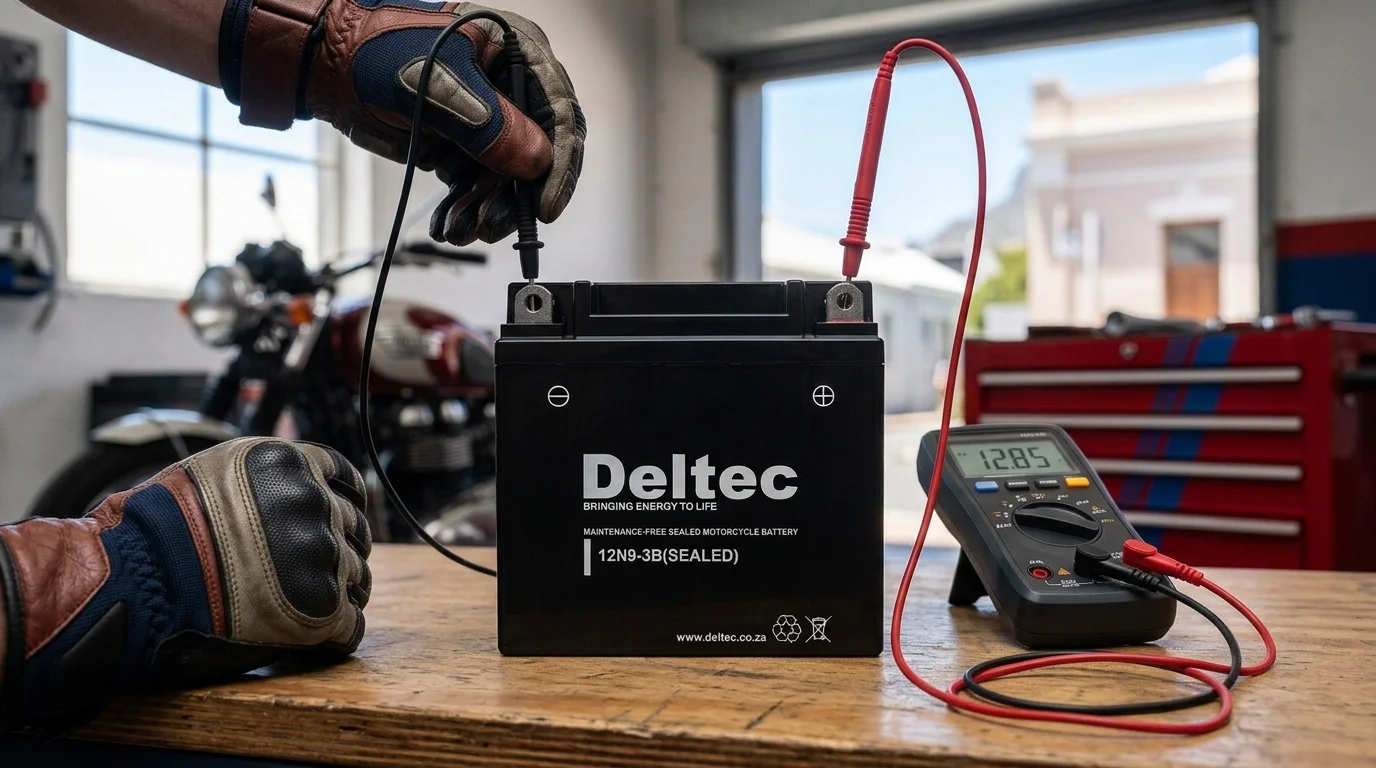
A simple multimeter is the most useful tool you can own for this. With the engine off and the bike rested for a few hours, a healthy 12V motorcycle battery should read at or above 12.6 volts. Anything below 12.4 volts means it’s time to charge it, and a reading under 12 volts often points to a battery that’s struggling to hold a charge at all. Checking voltage every few weeks through winter takes two minutes and tells you far more than guessing based on how the bike sounds when you start it.
Signs of an Ageing Battery
Some symptoms point to a battery nearing the end of its life rather than one that simply needs charging. If it charges fully but drains again within a day or two, if the headlights dim noticeably at idle, or if the bike cranks slower each time you start it, sulfation or internal wear is likely the cause. Most motorcycle batteries last between three and five years, so if yours is approaching that age and showing these signs, winter is a good time to plan for a replacement rather than wait for it to fail on a cold morning.
Should You Keep Riding or Store Your Bike for Winter?
How you manage your battery through winter depends largely on whether the bike is going to sit unused or get regular use.
Riding Through Winter
If you’re commuting or riding regularly, your alternator will keep the battery topped up as long as your trips are long enough. A five-minute trip to the shops and back generally isn’t enough to replace the power used to start the engine, especially with headlights, heated grips, or other accessories running. Aim for rides of at least 20 to 30 minutes when you can, and if most of your trips are short, plan to top the battery up with a charger every couple of weeks, regardless.
Storing Your Motorcycle
If your bike is going to sit for more than two or three weeks, it’s worth deciding upfront whether you’ll leave the battery connected with a maintainer or remove it entirely. Leaving it connected to a smart charger is the easier option and works well as long as the charger is designed for motorcycle batteries rather than a car charger, which can push too much current. If you don’t have a maintainer and the bike will be parked somewhere unheated and exposed, removing the battery and storing it indoors at room temperature is the safer route, with a charge top-up every few weeks.
The Best Way to Keep Your Battery Charged Over Winter
Whichever storage approach you choose, the single most effective thing you can do for your motorcycle batteries this winter is to keep them consistently charged.
Using a Smart Charger or Battery Maintainer
A smart charger, sometimes called a battery maintainer, brings the battery up to full charge and then automatically switches to a low-level float mode that tops it up without overcharging. This is different from simply plugging in a charger and forgetting about it, because the smart charger senses when the battery needs more power and when it doesn’t. Left connected all winter, it’s one of the most reliable ways to prevent both self-discharge and the sulfation that comes with it. Make sure whatever charger you use matches your battery type. A lithium motorcycle battery needs a charger with a dedicated lithium setting, since charging it incorrectly below certain temperatures can cause permanent damage.
Why Trickle Chargers Alone Aren’t Enough
Older-style trickle chargers apply a constant, low current without the ability to sense when the battery is full. Left connected for weeks without supervision, they can overcharge a battery, which shortens its lifespan just as much as letting it sit flat. If you only have access to a basic trickle charger, check on it regularly rather than leaving it connected indefinitely, or better yet, upgrade to a smart maintainer designed for the job.
Protecting Your Battery From Corrosion and Moisture
Charge isn’t the only thing winter threatens. The Western Cape’s rain and humidity make terminal corrosion a real risk, too.
Cleaning and Inspecting Terminals
Corrosion appears as a white or greenish crust around the battery terminals and cable connectors, and it interrupts the flow of current even if the battery itself is otherwise healthy. Disconnect the negative cable first, then the positive, and clean any build-up with a mix of baking soda and water applied with a small brush. Rinse it off, dry the terminals thoroughly, and reconnect in the reverse order, positive first, negative last. A light coating of terminal grease or petroleum jelly afterwards helps keep moisture out for longer.
Where and How to Store a Removed Battery
If you remove the battery for winter, keep it somewhere dry and at a stable room temperature rather than on a cold concrete or metal floor, which can draw heat away from it. A shelf in a garage cupboard or a spot inside the house works well. Keep it away from direct heat sources, too, since consistent moderate temperature matters more than warmth for a battery in storage.
Is It Time to Replace Your Motorcycle Battery?
Sometimes the best way to make it through winter reliably is to start the season with a battery that’s actually up to the job.
Lead-Acid vs AGM vs Lithium for Cold, Damp Conditions
Standard lead-acid batteries are the most affordable option, but are also the most sensitive to sulfation if neglected over winter. AGM batteries seal the electrolyte in a fibreglass mat rather than leaving it as free liquid, which makes them more resistant to vibration and generally better at holding charge in cooler, damp conditions. Lithium motorcycle batteries are lighter and hold their charge for much longer when sitting unused, though they need a charger with a lithium-specific setting and shouldn’t be charged in very low temperatures. If you’re weighing up your options, a battery like the Deltec FB-14L-A2 gives you a sense of what a reliable, well-rated AGM option looks like for everyday riding, with solid cold cranking amps for dependable starts through the colder months.
Making a Replacement Affordable
If your current battery is ageing or has already let you down once this season, replacing it before the coldest months hit is far less painful than being stranded. Keep an eye on Deltec’s current battery specials if you’re timing a replacement, and remember that spreading the cost is an option too, so a new battery doesn’t have to be a once-off hit to your budget.
Frequently Asked Questions
How often should I charge my motorcycle battery in winter?
If your bike is sitting unused, check the voltage every two to three weeks and charge it if it drops below 12.4 volts. A smart charger left permanently connected removes the guesswork entirely by maintaining the charge automatically.
Can I use a car battery charger on my motorcycle battery?
It’s best to avoid this. Car chargers are typically designed for much larger batteries and can push too much current into a smaller motorcycle battery, risking overcharging and damage. Use a charger specifically designed for motorcycle batteries instead.
Do motorcycle batteries need to be removed for winter in Cape Town?
Not necessarily. Since Cape Town winters rarely drop below freezing, removal isn’t essential the way it might be in a colder climate. If your bike is parked somewhere sheltered and you have a smart charger connected, leaving the battery in place is usually fine.
How do I know if my motorcycle battery needs replacing rather than charging?
If the battery charges fully but drains again within a day or two, or if it struggles to hold above 12.4 volts after a full charge, sulfation or internal wear has likely set in. At that point, charging becomes a temporary fix rather than a solution, and replacement is the more reliable option.
What’s the difference between a trickle charger and a battery maintainer?
A trickle charger applies a constant low current without sensing the battery’s charge level, which can lead to overcharging if left unattended for long periods. A battery maintainer, or smart charger, automatically switches to a low float mode once the battery is full, making it safer to leave connected for weeks at a time.
Are AGM or lithium batteries better for winter riding?
Both perform better than standard lead-acid batteries in cold, damp conditions, though for different reasons. AGM batteries hold up well against vibration and moisture, while lithium batteries resist self-discharge over long idle periods but need a charger with a lithium setting to charge safely.
A little routine attention now saves you from a dead battery, a frustrating morning, and possibly a full replacement come spring. Whether you’re topping up your current battery or ready for something more reliable, you can browse Deltec’s motorcycle battery range and shop with flexible payment options through PayJustNow or PayFlex, so keeping your bike winter-ready doesn’t have to strain your budget all at once.

About Deltec Batteries
At Deltec Batteries we do more than sell batteries, we are a dynamic, forward-thinking company at the forefront of robust, efficient energy solutions – At home. At work. On the road – Wherever life takes you.
Follow Us
@deltecbatteriesbellville
@deltecbatteriestokai
@deltecbatteries
Shop Battery Deals

Motorcycle Batteries
Convenient payment

Earn Money Recycling

Recent Blog pOSTS