Off-grid camping is one of the most rewarding ways to travel in South Africa. Whether you’re exploring the Cederberg, heading into Tankwa, or touring the Garden Route, reliable power makes the difference between a stress-free trip and a frustrating one.
If you’re new to caravan or 4×4 camping, understanding off-grid power can feel overwhelming. Batteries, solar panels, DC-DC chargers, inverters — where do you even start?
This guide breaks it down from beginner to advanced level, so you can confidently build the right system for your needs.
What Is Off-Grid Camping Power?
Off-grid camping power means generating and storing your own electricity without relying on campsite plug points or municipal supply.
A typical off-grid caravan power system includes:
- A deep-cycle battery (AGM or lithium)
- Solar panels
- A solar charge controller (MPPT)
- Optional DC-DC charger (charges while driving)
- Optional inverter (for 220V appliances)
The bigger your power demands, the more advanced your setup needs to be.
Beginner Level: Simple Off-Grid Setup
If you’re going away for weekend trips, your power needs are usually modest.
Basic Components
- 100Ah AGM deep cycle battery
- Portable 100W solar panel (optional)
- LED lights
- 12V fridge
- USB charging ports
Understanding Amp Hours (Ah)
Amp hours (Ah) measure battery capacity.
- A 100Ah AGM battery provides about 50Ah usable power
- A 100Ah lithium battery provides up to 90Ah usable power
That usable capacity is critical when planning how long you can stay off-grid.
Typical Weekend Usage
- Fridge: 40–60Ah per day
- Lights & devices: 10–20Ah
For short trips, a single AGM battery may be enough.
Intermediate Level: More Days, More Power
If you’re staying off-grid for 3–5 days, your system needs to work harder.
Adding Solar Power
Solar panels recharge your battery during the day.
- 100W = light charging
- 200W–300W = suitable for fridge + lights
- 300W+ = better for lithium systems
An MPPT solar charge controller improves charging efficiency, especially in cloudy conditions.
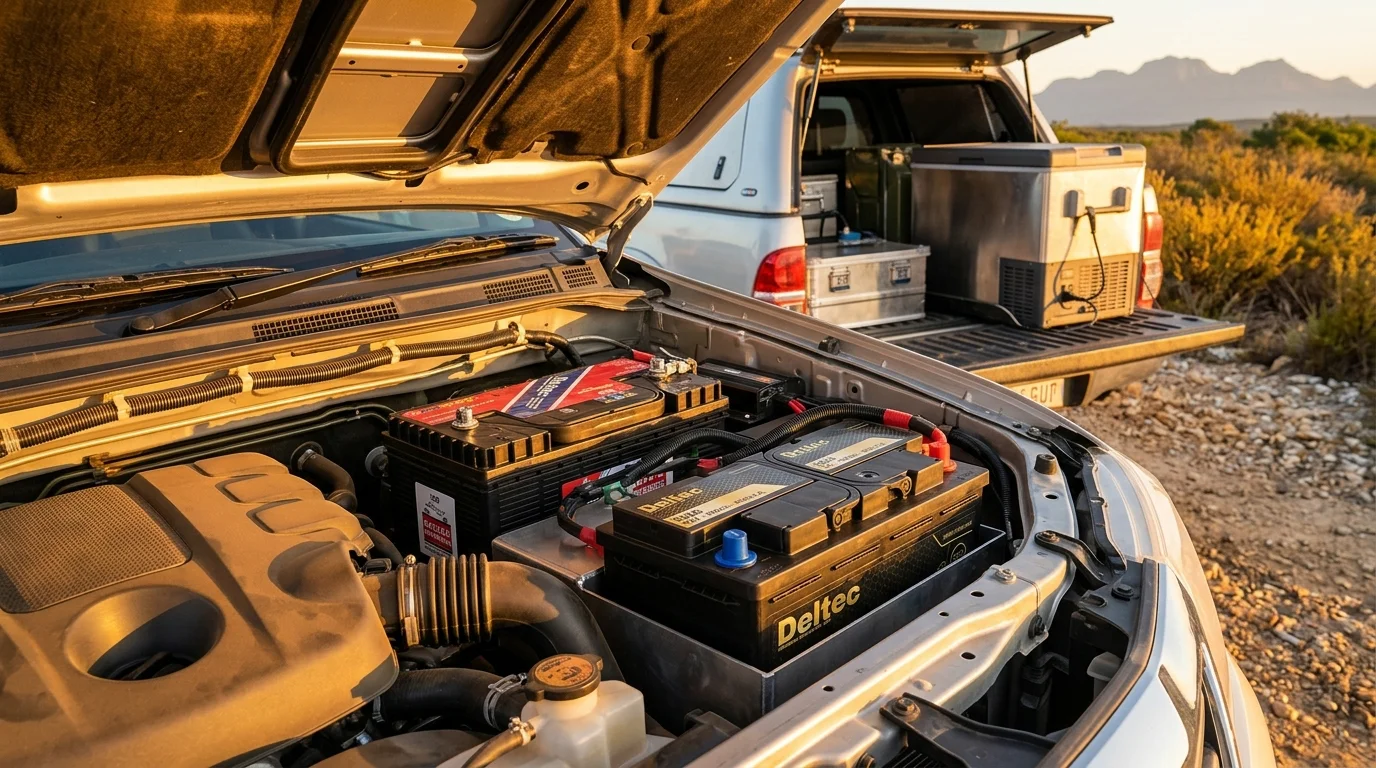
Dual Battery Systems (4×4 Setup)
A dual battery system separates your starter battery from your auxiliary battery.
This means:
- Your fridge runs off the second battery
- Your vehicle always starts
A DC-DC charger ensures proper charging while driving.
AGM vs Lithium at This Stage
AGM:
- Lower upfront cost
- Heavier
- Slower charging
Lithium:
- Lightweight
- Faster charging
- More usable capacity
- Longer lifespan
For regular travellers, lithium quickly becomes the better long-term investment.
Advanced Level: Full Off-Grid Power Systems
This is where serious overlanders and long-term caravan travellers operate.
High-Capacity Lithium Systems
- 100Ah–200Ah lithium batteries
- 300W–600W solar setups
- Smart battery monitoring
- DC-DC + MPPT integration
Lithium batteries accept charge faster and can handle deeper discharge, making them ideal for extended off-grid travel.
Inverters & 220V Appliances
An inverter converts 12V battery power into 220V household power.
Common uses:
- Microwave
- Coffee machine
- Air fryer
- Laptop chargers
You must size your inverter properly:
- Small appliances: 1000W
- Kitchen appliances: 2000W+
- Air conditioning: significantly more (see FAQ below)
FAQs
Can you run an AC off-grid?
Yes, but it requires a serious setup.
Air conditioners draw high wattage. To run AC off-grid, you would typically need:
- Large lithium battery bank (200Ah+)
- 2000W–3000W pure sine wave inverter
- Substantial solar array (400W+)
- Careful load management
For most campers, running AC off-grid is possible but expensive and complex. Many opt for fans or low-power cooling solutions instead.
How long will a 100Ah battery last off-grid?
- AGM (100Ah): ~50Ah usable = 1 day of moderate use
- Lithium (100Ah): ~90Ah usable = 1–2 days depending on consumption
Solar dramatically extends runtime.
How many solar panels do I need for camping?
- 100W: light top-up charging
- 200W–300W: average caravan use
- 300W+: extended off-grid stays
Match solar wattage to daily battery usage.
Final Thoughts
Off-grid camping power doesn’t have to be complicated.
Start simple. Upgrade when your travel demands increase. And always match your battery, solar, and charging system to your actual usage.
Whether you’re a weekend camper or a serious overlander, the right power setup gives you freedom — and peace of mind.
Visit Deltec Batteries in Bellville for power upgrades.